
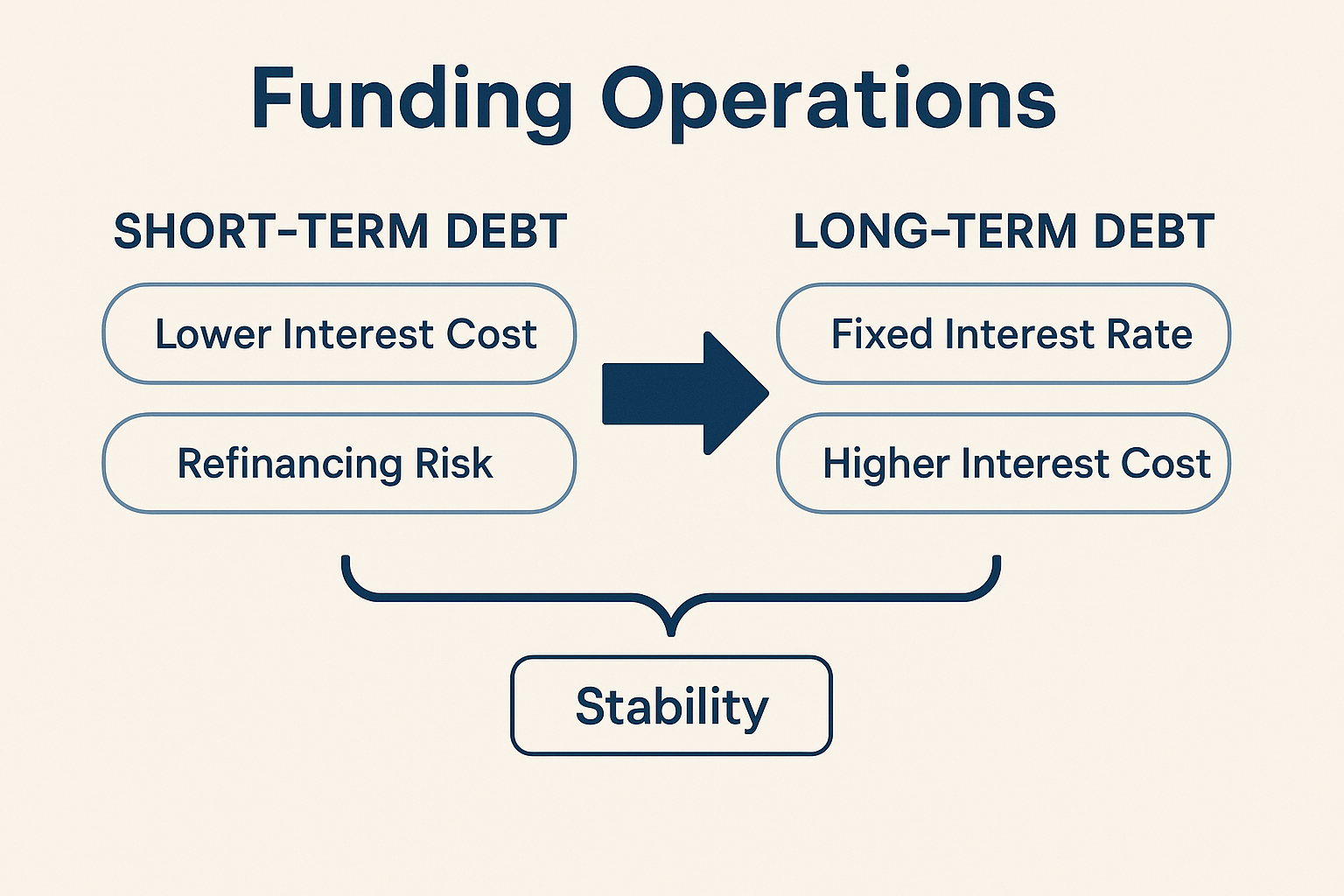
ប្រតិបត្តិការផ្តល់មូលនិធិសំដៅទៅលើការអនុវត្តនៃការបំលែងបំណុលរយៈពេលខ្លីទៅជាបំណុលរយៈពេលវែង ជាធម្មតាមានអត្រាការប្រាក់ថេរ ដែលជាយុទ្ធសាស្ត្រដែលសាជីវកម្ម និងរដ្ឋាភិបាលប្រើប្រាស់ជាទូទៅដើម្បីកែលម្អស្ថិរភាពហិរញ្ញវត្ថុ។ បំណុលរយៈពេលខ្លីដែលជារឿយៗត្រូវបានចាត់ទុកថា "មិនមានមូលនិធិ" នៅលើតារាងតុល្យការមានហានិភ័យនៃការផ្តល់ហិរញ្ញប្បទានឡើងវិញ ពីព្រោះវាត្រូវតែត្រូវបានផ្ទេរជាញឹកញាប់ ហើយត្រូវបានប៉ះពាល់នឹងការផ្លាស់ប្តូរអត្រាការប្រាក់។ តាមរយៈការផ្លាស់ប្តូរកាតព្វកិច្ចទាំងនេះទៅជាបំណុលរយៈពេលវែង អង្គភាពអាចបង្កើតកាលវិភាគសងប្រាក់វិញដែលអាចព្យាករណ៍បានកាន់តែច្រើន និងកាត់បន្ថយភាពមិនប្រាកដប្រជាដែលទាក់ទងនឹងអត្រាការប្រាក់រយៈពេលខ្លីដែលមានការប្រែប្រួល។ ទោះបីជាបំណុលរយៈពេលវែងជាធម្មតាភ្ជាប់មកជាមួយអត្រាការប្រាក់ខ្ពស់ជាងក៏ដោយ វាផ្តល់នូវការការពារប្រឆាំងនឹងភាពប្រែប្រួល និងគាំទ្រដល់ការធ្វើផែនការហិរញ្ញវត្ថុដែលអាចទុកចិត្តបានកាន់តែច្រើន។
បំណុលរយៈពេលខ្លីជាទូទៅមានថ្លៃដើមការប្រាក់ទាបជាង ប៉ុន្តែធ្វើឱ្យអ្នកខ្ចីប្រឈមនឹងការកំណត់អត្រាការប្រាក់ឡើងវិញនៅពេលដែលបំណុលចាស់ទុំ ឬត្រូវបានផ្តល់ហិរញ្ញប្បទានឡើងវិញ។ ឧបករណ៍អត្រាការប្រាក់អថេរអាចកែតម្រូវជាប្រចាំ ហើយសូម្បីតែបំណុលរយៈពេលខ្លីដែលមានអត្រាការប្រាក់ថេរក៏កំណត់ឡើងវិញយ៉ាងមានប្រសិទ្ធភាពនៅពេលដែលត្រូវបានជំនួសនៅអត្រាទីផ្សារបច្ចុប្បន្ន។ ផ្ទុយទៅវិញ បំណុលរយៈពេលវែង ចាក់សោអត្រាការប្រាក់សម្រាប់រយៈពេលយូរ ដោយផ្តល់នូវស្ថេរភាពទោះបីជាមានការចំណាយខ្ពស់ដែលផ្តល់សំណងដល់អ្នកឱ្យខ្ចីសម្រាប់ហានិភ័យនៃការខកខានសងប្រាក់កើនឡើងតាមពេលវេលាក៏ដោយ។ ប្រតិបត្តិការផ្តល់មូលនិធិអនុញ្ញាតឱ្យអ្នកចេញមូលបត្រកំណត់ពេលវេលាជាយុទ្ធសាស្ត្រសម្រាប់ការខ្ចីប្រាក់រយៈពេលវែង ខណៈពេលដែលប្រើប្រាស់ឧបករណ៍រយៈពេលខ្លីសម្រាប់ភាពបត់បែនបណ្តោះអាសន្ន ដោយធ្វើឱ្យមានតុល្យភាពប្រសិទ្ធភាពចំណាយជាមួយនឹងការគ្រប់គ្រងហានិភ័យ។
ពីទស្សនៈវិភាគ ប្រតិបត្តិការផ្តល់មូលនិធិប៉ះពាល់ដល់របៀបដែលវិនិយោគិនវាយតម្លៃសុខភាពហិរញ្ញវត្ថុ។ បំណុលរយៈពេលវែងត្រូវបានចាត់ថ្នាក់ជា "មូលនិធិ" ហើយដើរតួនាទីយ៉ាងសំខាន់ក្នុងការវាយតម្លៃសមាមាត្រមូលធន និងដើមទុនធ្វើការសុទ្ធ។ សមាមាត្រមូលធនវាស់វែងបំណុលរយៈពេលវែងទាក់ទងទៅនឹងដើមទុនសរុប ខណៈពេលដែលសមាមាត្រដើមទុនធ្វើការសុទ្ធប្រៀបធៀបបំណុលរយៈពេលវែងទៅនឹងតួលេខដើមទុនដែលមានដែលវិនិយោគិនប្រើដើម្បីវាស់ស្ទង់អានុភាព និងសាច់ប្រាក់ងាយស្រួល។ តាមរយៈការបំប្លែងបំណុលរយៈពេលខ្លីទៅជាកាតព្វកិច្ចរយៈពេលវែង ក្រុមហ៊ុនអាចធ្វើឱ្យមានស្ថេរភាពនូវរង្វាស់ទាំងនេះ បង្កើនតម្លាភាព និងបង្កើនទំនុកចិត្តក្នុងចំណោមវិនិយោគិន ជាពិសេសនៅក្នុងបរិយាកាសដែលអត្រាការប្រាក់កំពុងកើនឡើង ឬមិនអាចទាយទុកជាមុនបាន។
How Funding Operations Reduce Financial Risk
Funding operations refer to the practice of converting short-term debt into long-term, typically fixed-rate debt, a strategy commonly used by corporations and governments to improve financial stability. Short-term debt often considered “unfunded” on the balance sheet carries refinancing risk because it must be rolled over frequently and is exposed to changing interest rates. By shifting these obligations into long-term debt, entities can create a more predictable repayment schedule and reduce uncertainty tied to fluctuating short-term rates. Although long-term debt usually comes with higher interest rates, it provides protection against volatility and supports more reliable financial planning.
Short-term debt generally has lower interest costs but exposes borrowers to interest rate resets when the debt matures or is refinanced. Variable-rate instruments can adjust periodically, and even fixed-rate short-term debt effectively resets when replaced at prevailing market rates. Long-term debt, by contrast, locks in rates for extended periods, offering stability despite the higher cost that compensates lenders for increased default risk over time. Funding operations allow issuers to strategically time long-term borrowing while using short-term instruments for temporary flexibility, balancing cost efficiency with risk management.
From an analytical perspective, funding operations affect how investors assess financial health. Long-term debt is classified as “funded” and plays a key role in evaluating capitalization and net working capital ratios. The capitalization ratio measures long-term debt relative to total capital, while the net working capital ratio compares long-term debt to available capital figures investors use to gauge leverage and liquidity. By converting short-term debt into long-term obligations, companies can stabilize these metrics, enhance transparency, and improve confidence among investors, particularly in environments where interest rates are rising or unpredictable.





Comments