

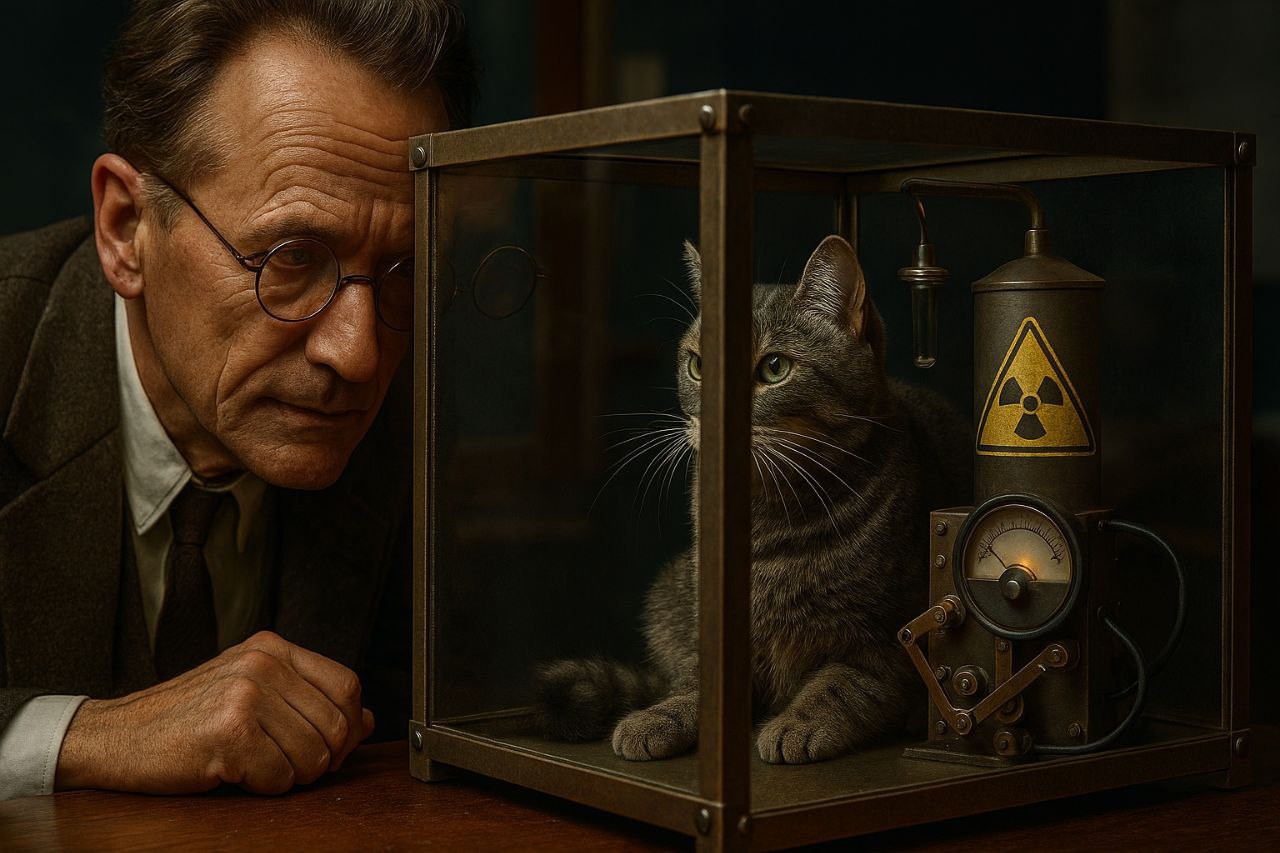
ថ្ងៃទី ៣០ វិច្ឆិកា ឆ្នាំ១៩៣៥ គឺជាថ្ងៃដែលរូបវិទូអូទ្រីស Erwin Schrödinger បានផ្សព្វផ្សាយជាសាធារណៈនូវ "ការពិសោធន៍អំពីសត្វឆ្មា" ឬត្រូវបានគេស្គាល់ថាជា Schrödinger's Cat។ ការពិសោធន៍ក្នុងចិត្ត (thought experiment) ដ៏ល្បីល្បាញនេះ ត្រូវបានបង្កើតឡើងដើម្បីគូសបញ្ជាក់អំពីបញ្ហា និងភាពចម្លែកនៃគោលការណ៍គ្រឹះមួយនៃមេកានិចកង់ទិច (Quantum Mechanics)។ វាបង្ហាញពីរបៀបដែលច្បាប់កង់ទិចគ្រប់គ្រងពិភពអាតូមិកតូចៗ អាចបង្កឱ្យមានស្ថានភាពដែលមើលទៅហាក់ដូចជាមិនអាចទៅរួច ឬផ្ទុយនឹងវិចារណញ្ញាណនៅក្នុងពិភពលោកធំៗ ដែលយើងអាចមើលឃើញ។
ការពិសោធន៍នេះពាក់ព័ន្ធនឹងការដាក់សត្វឆ្មាមួយក្បាលចូលទៅក្នុងហឹបបិទជិតមួយ ជាមួយនឹងយន្តការមួយដែលភ្ជាប់ទៅនឹងអាតូមវិទ្យុសកម្ម។ អាតូមនេះមានប្រូបាប ៥០% ក្នុងការបំបែកខ្លួន និងបញ្ចេញវិទ្យុសកម្ម ហើយប្រូបាប ៥០% ទៀតក្នុងការមិនបំបែកខ្លួន។ ប្រសិនបើអាតូមបំបែកខ្លួន (៥០%) នោះវិទ្យុសកម្មនឹងត្រូវបានបញ្ចេញ ដែលនឹងបង្កឱ្យឆ្មាស្លាប់។ ប្រសិនបើអាតូមមិនបំបែកខ្លួន (៥០%) នោះឆ្មានឹងនៅរស់។ ដូច្នេះហើយ ជោគវាសនារបស់សត្វឆ្មាគឺត្រូវបានផ្សារភ្ជាប់ទាំងស្រុងទៅនឹងព្រឹត្តិការណ៍អាតូមិកដ៏តូចមួយ។
យោងតាមគោលការណ៍មេកានិចកង់ទិចដ៏សំខាន់មួយ ហៅថា Quantum Superposition ដរាបណាគេមិនទាន់បើកហឹបមើលលទ្ធផល នោះអាតូមត្រូវស្ថិតនៅក្នុងស្ថានភាពទាំងពីរក្នុងពេលតែមួយ គឺ "បំបែកខ្លួន" និង "មិនបំបែកខ្លួន"។ ក្នុងន័យនេះ គោលការណ៍នេះតម្រូវឱ្យយើងពិចារណាថា សត្វឆ្មានៅក្នុងហឹបក៏ត្រូវតែស្ថិតនៅក្នុងស្ថានភាព "មិនស្លាប់ និងមិនរស់ក្នុងពេលតែមួយ" រហូតទាល់តែមានការវាស់វែង (ការបើកហឹប) ទើបស្ថានភាពរបស់វាត្រូវបានកំណត់ថា "ស្លាប់" ឬ "រស់"។ ការពិសោធន៍របស់ Schrödinger នេះបានក្លាយជាឧទាហរណ៍ដ៏ល្បីល្បាញបំផុតមួយនៃការផ្លាស់ប្តូរពីភាពមិនច្បាស់លាស់របស់កង់ទិចទៅជាការពិតជាក់ស្តែង។
Schrödinger's Cat in the History of Science
November 30, 1935, was the day Austrian physicist Erwin Schrödinger publicly announced his "cat experiment," also known as Schrödinger's Cat. This famous thought experiment was designed to highlight the problems and oddities of one of the fundamental principles of quantum mechanics. It showed how quantum laws governing the small atomic world can lead to seemingly impossible or counterintuitive situations in the larger world we can see.
The experiment involved placing a cat in a sealed container with a mechanism attached to a radioactive atom. The atom had a 50% chance of disintegrating and emitting radiation, and a 50% chance of not disintegrating. If the atom disintegrated (50%), radiation would be released, killing the cat. If the atom did not disintegrate (50%), the cat would survive. Thus, the fate of the cat was completely tied to this tiny atomic event.
According to a fundamental principle of quantum mechanics called Quantum Superposition, as long as the box is not opened to see the results, the atom must be in both states at the same time: "dissociated" and "not dissociated". In this sense, this principle requires us to consider that the cat in the box must also be in a state of "not dead and not alive at the same time" until a measurement is made (the box is opened) and its state is determined to be "dead" or "alive". Schrödinger's experiment has become one of the most famous examples of the transition from quantum uncertainty to reality.





Comments